
The Telescope-Bearing Boeing 747SP: The Legacy of SOFIA
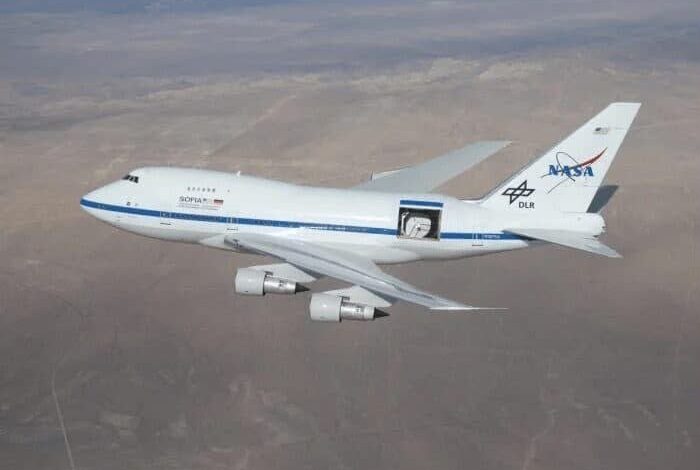
One of the most distinctive variants in the history of the Boeing 747 family is the Boeing 747SP modified to carry a massive infrared telescope. Originally manufactured for Pan American World Airways and subsequently retrofitted by NASA, the aircraft served for years as an airborne astronomical platform under the Stratospheric Observatory for Infrared Astronomy (SOFIA) program.
The modified widebody featured a 2.5-meter infrared telescope integrated into its aft fuselage section. During research flights, a specialized fuselage door opened at cruising altitudes of approximately 12 to 14 kilometers, enabling the onboard telescope to observe deep space. Operating at this altitude placed the observatory above roughly 99% of atmospheric water vapor, which typically obstructs infrared ground observations.
Jointly operated by NASA and the German Aerospace Center (DLR), the aircraft flew under the registration N747NA. Entering commercial service in 1977 as Pan Am’s “Clipper Lindbergh,” the 747SP was later repurposed through extensive structural modifications to support high-altitude scientific research missions.
Throughout its operational life, SOFIA contributed key data to studies on star formation zones, distant galaxies, planetary atmospheres, and objects across the Solar System. Following the conclusion of its scientific flight program in 2022, the telescope-bearing Boeing 747SP concluded its mission as one of the most remarkable engineering endeavors in modern aviation and aerospace history.