How Does an Aircraft Depart on Time? A Closer Look at İGA’s Cirium OTP Award

How Does an Aircraft Depart on Time? A Closer Look at İGA’s Cirium OTP Award
The Invisible Operation Behind Istanbul Airport’s Cirium OTP Success
For a passenger, an “on-time departure” may seem like nothing more than a green indicator next to the scheduled departure time on a terminal screen. Yet behind that single line of information lies a massive operation spanning air traffic control, ground handling, refueling, baggage systems, and many other processes that must be seamlessly synchronized, often down to the second.
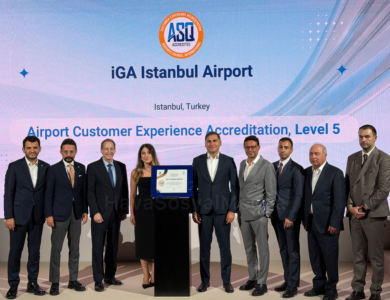
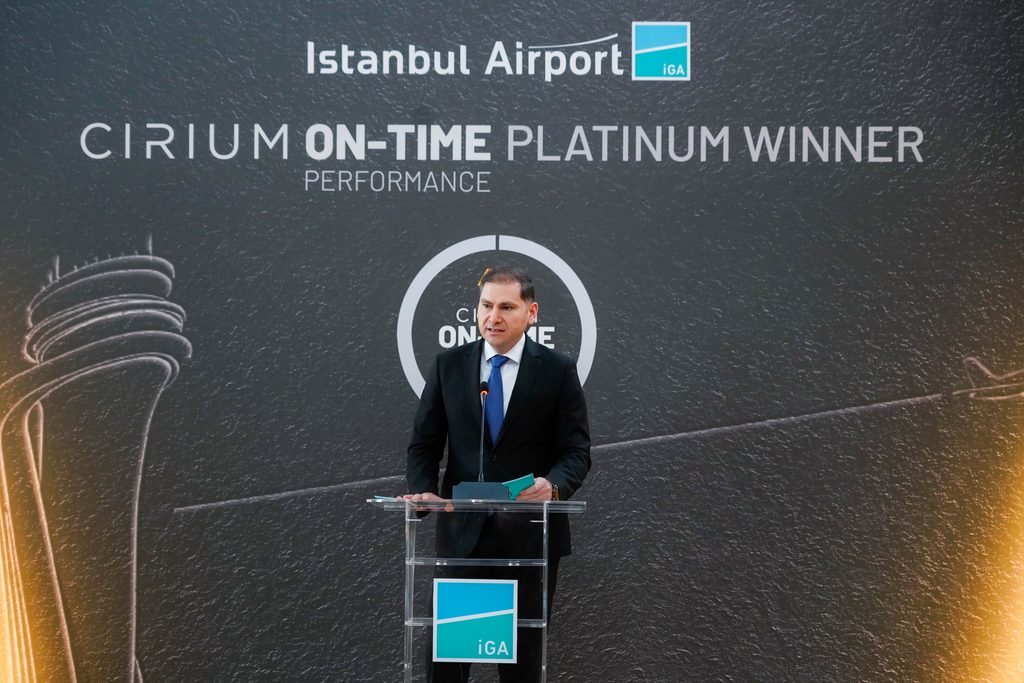
Thanks to this operational success, İGA Istanbul Airport was honored with the Platinum Award in Cirium’s 2025 On-Time Performance (OTP) Review. Cirium is one of the world’s leading aviation data and analytics organizations. İGA CEO Selahattin Bilgen received the award at a ceremony held in February this year.
But what exactly does this award represent? How is on-time performance measured? And what processes, largely unnoticed by millions of passengers, make this level of performance possible?
What Is the Cirium OTP Award?
With a 117-year corporate history, Cirium is recognized as one of the leading reference organizations for data and analytics in the global aviation industry. Its annual On-Time Performance Review evaluates the world’s leading airlines and airports based on their on-time departure and arrival performance.
The Platinum Award, however, recognizes more than strong performance in a single year. It rewards operational consistency and sustained improvement over time.
Cirium CEO Jeremy Bowen explains the award criteria as follows:
“In 2024, we introduced the Platinum Award as an award for excellence. It’s not just about whether flights depart on time. We look at the routes an organization serves, the complexity of its network, passenger volumes, and the real impact of delays on passengers.”
This approach shows that performance assessment goes far beyond delays measured in minutes. Route diversity, operational complexity, passenger volumes, and the passenger experience are also important parts of the evaluation process.
Why Does Istanbul Airport Stand Out?
To understand İGA Istanbul Airport’s achievement, it is important to first consider the scale of its operations.
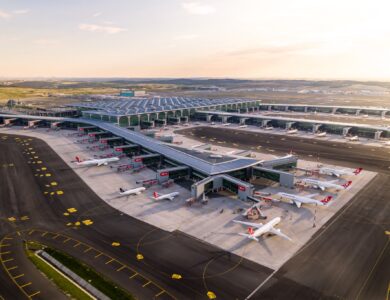
According to figures shared by İGA CEO Selahattin Bilgen, Istanbul Airport served approximately 84.3 million passengers and handled 547,000 flights in 2025. With an average of 1,707 flights per day, the airport experienced one of the busiest operational periods in its history.
Keeping an operation of this scale running on time cannot be attributed to the success of a single team. Air traffic control, airlines, ground handling companies, and the airport operator must work in continuous coordination toward the same goal.
How Is On-Time Performance Measured?
Cirium’s evaluation system does not focus solely on departure times. Performance is calculated by considering a wide range of operational criteria together.
These include:
- The airport’s route and destination network
- Operational complexity
- Annual and daily passenger volumes
- The impact of delays on passengers
- Operational sustainability and consistency
This methodology allows the world’s busiest connecting hubs and smaller airports to be assessed within the context of their own operational realities rather than being measured solely against the same basic criteria.
A Remarkable Rise in Three Years
According to Cirium data, Istanbul Airport’s on-time departure performance has improved consistently over the past three years:
2023: 68.62%
2024: 76.28%
2025: 80.72%
During the same period, Istanbul Airport climbed from 51st to 19th place in Cirium’s ranking of major airports.
Jeremy Bowen describes this progress as “consistent and measurable operational improvement.” This sustained development, rather than success in a single year, lies at the heart of the Platinum Award.
The Invisible Operation
For an aircraft to depart on time, much more has to happen than what passengers see inside the terminal.
From the moment an aircraft arrives at its parking position, multiple processes begin simultaneously:
- Passenger disembarkation
- Baggage and cargo unloading
- Refueling
- Cabin cleaning
- Catering loading
- Technical inspections
- Loading of new baggage and cargo
- Boarding preparations
- Slot coordination
- Pushback planning
Each of these processes must be completed within a specific timeframe. A delay of just a few minutes at any point in the chain can affect the operations that follow.

Selahattin Bilgen describes this invisible operation as follows:
“While everything may appear calm and seamless on the surface for our passengers, beneath the surface thousands of our experts work 24/7, supported by advanced technological infrastructure, to deliver flawless coordination.”
Coordination Is at the Heart of the Success
According to Jeremy Bowen, one of the key factors that sets Istanbul Airport apart is its role as a global connecting hub linking Europe, Asia, Africa, and the Middle East.
Improving on-time performance at a hub operating on this scale is not solely the achievement of the airport operator. It also reflects strong coordination among airlines, ground handling companies, and air traffic control.
Bowen notes that the data shows Istanbul Airport has not only improved its performance but has also succeeded in maintaining that higher level of operational efficiency.
Technology at the Center of Operations
At large-scale airports, operational management no longer relies solely on human resources. It also depends heavily on advanced digital infrastructure.
Real-time flight data monitoring, ground handling planning, slot management, and the early identification of operational risks all play critical roles in maintaining strong on-time performance.
Selahattin Bilgen emphasizes that the airport’s operations are supported by “advanced technological infrastructure,” while also highlighting the data-driven approach developed with Cirium as an important component of performance management.
The Next Goal: Managing an Even Larger Operation with the Same Success
For İGA, the Platinum Award is viewed less as an endpoint and more as the beginning of the next phase.
In 2025, Istanbul Airport served approximately 84.3 million passengers, a figure close to the population of Türkiye. Passenger and flight volumes are expected to increase further in the coming years, making the ability to maintain operational performance even more critical.
According to Cirium’s evaluation methodology, maintaining a high level of on-time performance while traffic volumes continue to grow is significantly more challenging than achieving the same performance at a lower operational scale.
For Istanbul Airport, one of the key objectives in the period ahead will therefore be to maintain its current 80.72% on-time departure performance despite increasing operational intensity, and ultimately push that figure even higher.