Air Astana CEO Ibrahim Canliel Shares Insights with HavaSosyalMedya at IATA AGM 2026 in Brazil
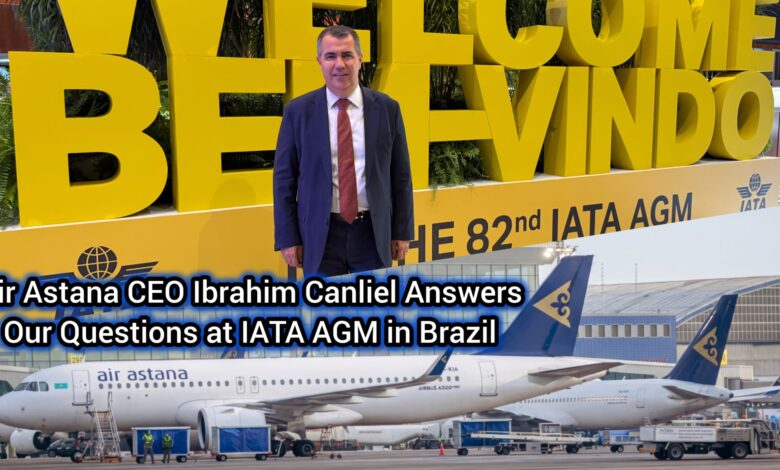
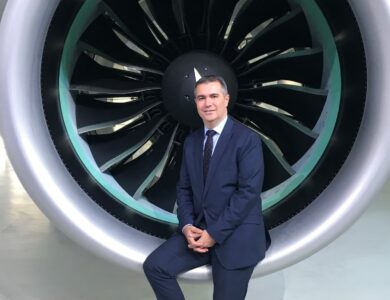
Air Astana CEO Ibrahim Canliel answered questions from HavaSosyalMedya during the IATA AGM 2026 held in Brazil. Canliel shared key evaluations regarding the post-Covid recovery, the Russia-Ukraine war, the recent Gulf crisis, and the airline’s outlook on the Turkish market.
Reflecting on the pandemic, Canliel noted that while Covid-19 presented unprecedented challenges for the aviation sector, the Air Astana Group managed to navigate and emerge from this period swiftly without external financial support.
“During the pandemic, airlines worldwide received over $239 billion in aid from their respective governments and shareholders. Despite this, as the Air Astana Group, we navigated through the crisis entirely on our own, without a single dollar of contribution from the government or our shareholders. We were among the first airlines to emerge from the crisis, returning to profitability in the first half of 2021 and maintaining a rapid growth trajectory ever since.”
While admitting that the Russia-Ukraine war initially created adverse effects, Canliel explained that these were quickly mitigated by launching new destinations.
“The Russia-Ukraine war naturally had a negative impact on us, and we had to suspend some of our flights. Nevertheless, thanks to our rapid expansion into destinations like the Maldives, Sanya in China, Bangkok, and Phuket, we closed 2022 as one of our most profitable years on record.”
Addressing the recent Gulf crisis, Canliel highlighted the airline’s agility in adjusting capacity planning within a very short timeframe to sustain its growth momentum.
“The first attacks began on February 28. As Air Astana Group, we shifted our capacity to Southeast Asia within 48 hours to capture the high-season demand of Nowruz. By the fifth day of the crisis, we reallocated our April and May Gulf capacity to our Asian and Western destinations. Our network points in South Korea, Bangkok, Phuket, and Vietnam became a core part of this scheduling. However, our most significant growth took place in China. While we operated 23 weekly flights to China last year, we are scaling this up to 52 weekly flights for the Summer 2026 season—a 127% increase.”
Canliel pointed out that connections with Turkey, Central Asia, and the Caucasus grew significantly during this period, resulting in a remarkable surge in transit passenger traffic.
“We increased our flights to Istanbul. Our weekly flight count across Central Asia and the Caucasus has approached nearly 100. We operate a total of 14 daily flights to Uzbekistan, Kyrgyzstan, Georgia, and Azerbaijan. As a result, our connection traffic experienced rapid growth, with transit passenger numbers skyrocketing by 158% in March.”
Emphasizing that a young and highly efficient organizational structure underpins the success of Air Astana and FlyArystan in the region, Canliel stated that the company continues to set industry standards.
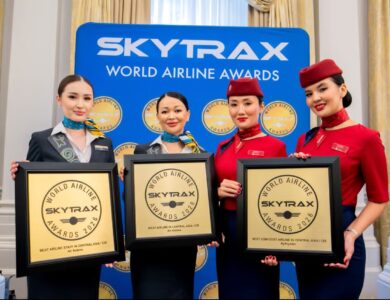
“We are a young airline, established in 2002. Consequently, we do not carry legacy habits or structural bottlenecks. We boast one of the most efficient cost structures in the region. However, what sets us apart is not just a cost advantage; we are the trendsetter defining service and operational standards in the region. Winning the ‘Best Airline in Central Asia’ award for 14 consecutive years is no coincidence. Many airlines around us closely monitor our service quality, procedures, and product offerings.”
Describing their 2024 initial public offering (IPO) as a major milestone, Canliel added that FlyArystan has played a critical role in driving growth within the Kazakh domestic market.
“In 2024, we became the first airline in the region to go public. We are listed not only in Kazakhstan but also on the London Stock Exchange. FlyArystan was launched in 2019, operating on a true low-cost carrier (LCC) business model. Thanks to this, Kazakhstan’s domestic passenger market expanded threefold—despite Covid, the Russia-Ukraine war, and recent crises—becoming one of the fastest-growing domestic markets in the world.”
Canliel affirmed that their dual-brand strategy is running seamlessly, with Air Astana catering to the premium passenger segment and FlyArystan successfully stimulating new demand. Beyond domestic routes, FlyArystan has entered a rapid international growth trend covering Central Asia, the Caucasus, and China.
“FlyArystan generates fresh traffic and expands the market. On the Air Astana side, we have a highly loyal passenger base willing to pay a premium for top-tier service. We continue to grow with new routes, a young fleet, and uncompromised service quality. Throughout our corporate history, we have posted a loss in only two years: one was during the Covid era, and the other was during the 2015 financial crisis. We achieved profitability in every other year.”
Turning his attention to the Turkish market, Canliel emphasized its strategic importance for Air Astana.
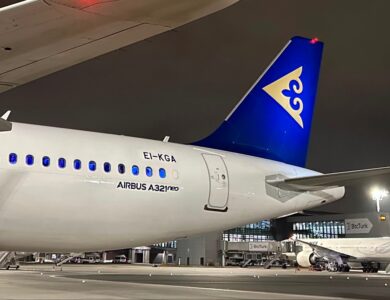
“Turkey is a highly strategic and vital market for us. In fact, we operated our very first international flights to Istanbul. This summer, we have increased our Istanbul frequency to 11 weekly flights. Istanbul is a crucial hub for both point-to-point and connecting traffic. In addition to Istanbul, with our flights to Antalya, Bodrum, Dalaman, and FlyArystan’s service to Alanya, our total weekly frequencies to Turkey exceed 60.”
Canliel noted that operations to Antalya have now transitioned into a year-round service, and they intend to keep expanding in Turkey with new destinations.
“In the past, our Antalya flights were strictly seasonal for the summer. For the last few years, however, we have been operating them year-round. We see robust demand in the winter months driven by golf tourism, MICE events, and sports training camps. Alongside this, we continue to grow in Bodrum, our newly launched Dalaman route this year, and the Alanya market served by our FlyArystan brand. We see immense potential in Turkey for both direct and connecting traffic.”
Concluding the interview on a lighter, more personal note, Canliel shared that his absolute favorite spot onboard is the window seat.
“In Business Class, I prefer the single seats in the second and fourth rows. Among ourselves, we call these seats the ‘Throne.’ They are exceptionally comfortable for working, resting, and dining on long-haul flights. In Economy Class, I usually prefer the front row as it offers a bit more legroom and makes deplaning much easier. My favorite seat of all is the window seat. However, when traveling with my wife, Asli, the window seat belongs to her.”