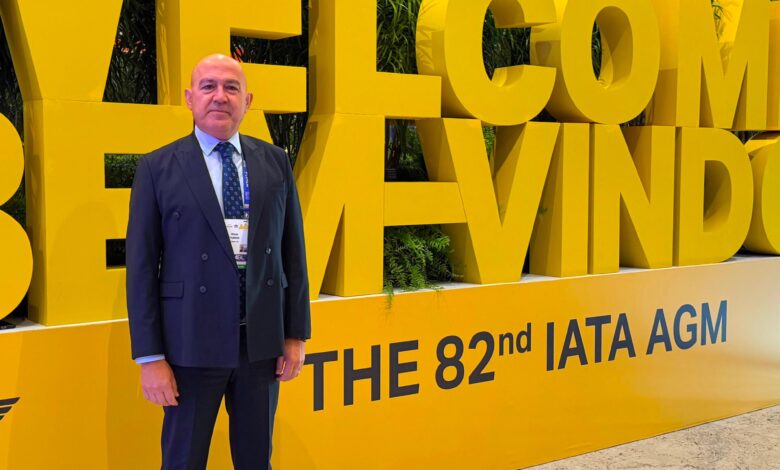
Speaking to HavaSosyalMedya during the IATA AGM in Rio de Janeiro, provided key insights into SalamAir’s new ownership structure, fleet strategy, engine-related operational challenges, and plans for Türkiye.
Türker revealed that 90 percent of has been acquired by the Omani government, placing the airline under state ownership alongside . He explained that both airlines will operate under a common strategic framework and now share largely aligned boards of directors. Under the new structure, Oman Air will continue as the country’s full-service carrier, while SalamAir will maintain its low-cost business model, with both airlines expected to grow in complementary roles.
Discussing operations in Türkiye, Türker said SalamAir will not operate flights to Istanbul this year due to ongoing engine-related issues. However, he confirmed that flights to Trabzon will launch as planned.
Türker also highlighted the airline’s fleet challenges, noting that six aircraft are currently grounded because of engine problems, representing approximately 35 percent of the fleet. While SalamAir expects to receive two Airbus A320ceo aircraft and one Airbus A320neo during the year, engine maintenance requirements continue to affect operations.
According to Türker, the Gulf region’s high temperatures and sandy environmental conditions accelerate wear on the high-pressure turbine (HPT) blades used in CFM LEAP-1A engines. As a result, engines require maintenance approximately every one to one and a half years.
He added that has completed technical upgrades designed to improve the durability of HPT blades, and that the new-standard components are now being installed on engines undergoing maintenance.
To address the issue, SalamAir has restructured its operational planning to maximize engine life. Türker explained that the airline now manages separate network strategies for its Airbus A321neo and Airbus A320neo fleets. Because short-haul routes generate higher engine cycle counts, the airline assigns aircraft based on mission profiles and applies operational planning aimed at optimizing engine performance and maintenance intervals.