New Details Emerge in Miami Amazon Air Crash
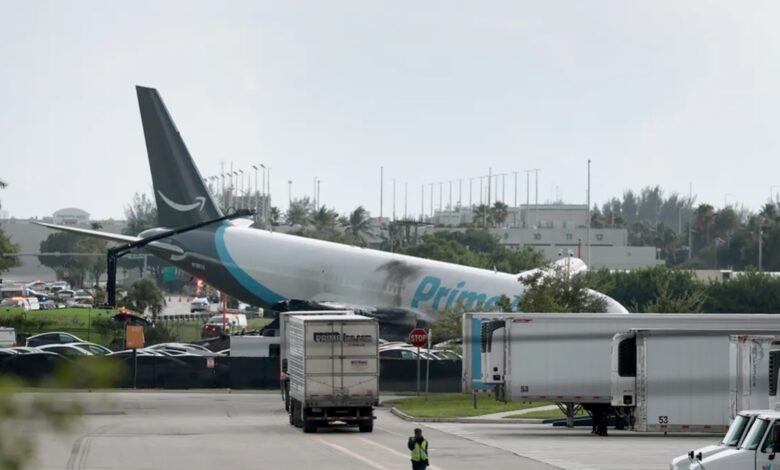
The NTSB has released new information on the accident involving an Amazon Air Boeing 767-33A freighter that overran the runway in Miami. Preliminary data show that the aircraft touched down at high speed on Runway 30 at Miami International Airport. The nose and right main landing gear touched down at a groundspeed of 158 knots approximately 30 seconds before the crash, while the left main landing gear contacted the runway about 19 seconds later at 134 knots.
Wheel brakes were applied at 146 knots approximately 23 seconds before the recording ended. However, the brakes were released around 15 seconds before the end of the recording as the thrust levers were advanced to levels consistent with a go-around. About 11 seconds before the recording ended, the engines were returned to idle and the brakes were reapplied, remaining engaged until the recording stopped. The final groundspeed recorded by the flight data recorder was 65 knots.
NTSB investigator Chihoon Shin said the recorded data showed no indication that the speed brake/spoiler systems or thrust reversers were deployed. Although wheel braking was used, the apparent non-deployment of these two systems, which help decelerate the aircraft after landing, has become a key focus of the investigation. The NTSB said the pilots may have briefly considered a go-around after touchdown, with the apparent change in decision occurring during the critical seconds before the accident.
The Boeing 767 overran the runway by approximately 1,300 feet (396 metres), striking airport equipment and vehicles before breaching the perimeter fence and reaching an area outside the airport. Five people on the ground were killed and five others were injured. Both pilots survived the crash. The NTSB said the cockpit voice recorder contained approximately two hours of audio, while the flight data recorder held around 55 hours of data.
The NTSB has not yet determined the probable cause of the accident. The investigation remains ongoing and is examining pilot decision-making, aircraft landing performance, weather conditions and other operational factors.