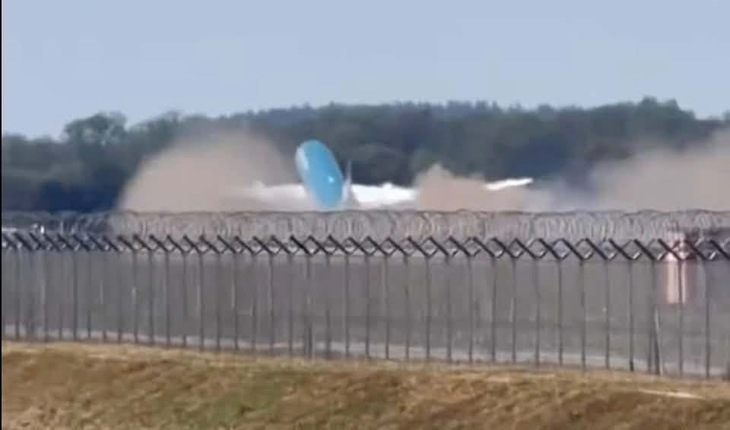
New technical details have surfaced regarding the serious incident involving a Vietnam Airlines Boeing 787-9, which suffered a tail strike during takeoff on its Munich–Hanoi flight on August 15. The preliminary report has been released regarding the aircraft, which experienced a loss of acceleration during the takeoff roll, rotated near the end of the runway with a tail strike, and returned to Munich following fuel dumping.
According to the preliminary investigation report shared by the Civil Aviation Authority of Vietnam, the VN-A867 registered Boeing 787-9 operating flight VN34 from Munich to Noi Bai (Hanoi) experienced a roughly 2-second stall in acceleration approximately halfway down runway 26L. The airspeed reached decision speed (V1) before dropping again. Assessing that the remaining runway distance was insufficient to reject the takeoff, the flight crew advanced the throttles to maximum power and continued the procedure. The crew rotated the aircraft approximately 91 meters before the end of the runway, resulting in a tail strike as it became airborne.
Brake Temperatures Reached Absolute Maximum
Telemetry data released following the incident showed that all brake systems on the main landing gears reached 9.9—the maximum measurable limit on system indicators—just 15 minutes after takeoff. While a range of 0.0 to 4.9 is considered normal on Boeing 787 aircraft, values of 5.0 and above trigger cockpit warnings. All main landing gear brakes hitting maximum levels so early in the flight indicates that substantial energy was absorbed by the braking system during the takeoff roll, or that damaged tires transferred severe heat directly into the brake units.
Following takeoff, the pilots received cockpit warnings indicating a tail strike and loss of pressure in four of the eight main landing gear tires, prompting the decision to return to Munich Airport. The aircraft dumped fuel to reduce landing weight and performed two low passes over the field for visual inspection before touching down on runway 26R approximately two hours after departure, coming to a stop on taxiway A4. All 271 passengers and 16 crew members disembarked safely via mobile stairs with no injuries reported.
Subsequent inspections revealed four blown tires—three on the left main landing gear and one on the right—along with extensive scraping marks along the lower rear fuselage and tears in the aircraft skin. The aircraft remains grounded as technical investigations continue under ICAO Annex 13, conducted jointly by German and Vietnamese accident investigation authorities.