Air Astana Reports Q1 2026 Results
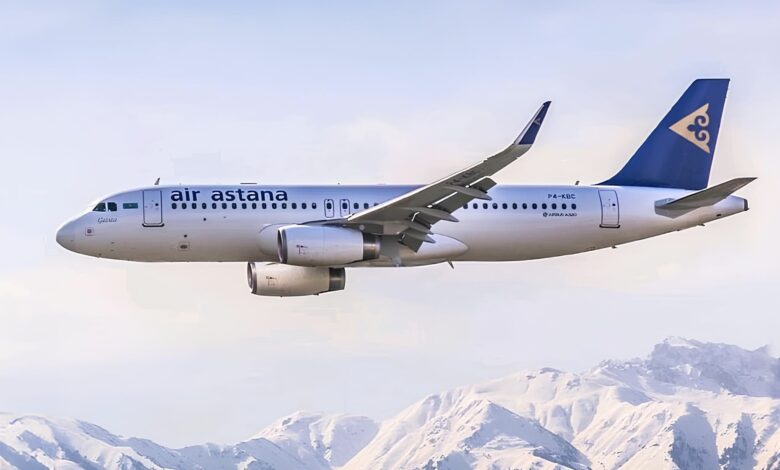
CEO Canlıel: Revenue and Traffic Growth Continued
Air Astana CEO Ibrahim Canlıel stated that revenue and traffic growth continued in his first quarterly results since taking office. He noted that despite challenging market conditions and ongoing cost pressures, passenger traffic increased by 3%, while revenue rose by 13.2%.
Canlıel also emphasized that within 48 hours of the Gulf crisis, the airline began reallocating aircraft to respond to rapidly changing demand conditions. He added that the company operated repatriation flights during this period and responded to increased transit demand from both business and leisure passengers.
The CEO further highlighted that, as part of the long-term network strategy, Air Astana launched its first flight to Shanghai, capitalizing on growth opportunities in China, while also increasing capacity to India, Central Asia, and the Caucasus.
The Air Astana Group has announced its financial and operational results for the first quarter of 2026. While the company maintained growth in revenue and traffic, rising costs and operational pressures weighed on profitability.
Revenue and Traffic Increase, Profitability Declines
In the first quarter of 2026, Air Astana’s total revenue and other income rose by 13.2% year-on-year to $331 million. Passenger traffic, measured in RPK, increased by 3% to 3.94 billion, while the load factor improved by 1.8 percentage points to 83.3%.
However, profitability declined. EBITDAR dropped by 19.6% to $48.2 million, while the company reported a net loss of $21.1 million.
Although unit revenue (RASK) increased by 12.4% to 7.01 cents, unit cost (CASK) rose by 19.8% to 7.30 cents, putting pressure on margins.
Capacity Management and Rapid Adaptation to Crises
The company quickly adapted its operations by reallocating capacity following developments in the Gulf region. CEO İbrahim Canlıel stated that aircraft were redirected to alternative markets within 48 hours after the onset of the conflict, supporting revenue growth.
Capacity on Middle East routes decreased by 51%, while unused capacity was shifted to Southeast Asia and east-west transit routes. Transit passenger traffic increased by 65%.
International Expansion, Domestic Contraction
In line with its strategic focus, international capacity grew by 12.8%, while domestic capacity declined by 8.7%. This shift reflects the company’s strategy to focus on higher-margin international routes.
In March, demand and revenue showed a strong recovery. Load factors exceeded plan by 9 percentage points, while average ticket prices increased by 10%.
Operational and Technical Investments Continue
Air Astana continued investing in technical and training infrastructure to improve operational efficiency.
15 engine replacements were carried out at the Astana technical center during the quarter
5 Airbus C-check maintenance events were completed
A second A320 full flight simulator was commissioned and received EASA certification
Digitalization and Passenger Experience Improvements
As part of its digital transformation, the company introduced several initiatives to enhance passenger experience.
The online check-in system was fully renewed
The mobile application reached 128,000 monthly active users
Biometric boarding and real-time flight notifications were implemented
AI-based solutions and digital operational tools have also been introduced to improve efficiency.
Fleet Growth and Future Plans
Air Astana continues its fleet expansion strategy, targeting a total of 86 aircraft by 2030. The majority of the fleet will consist of Airbus A320 family aircraft, alongside the addition of Boeing 787-9 aircraft.
The new 787-9 aircraft are expected to replace the existing Boeing 767 fleet.
Cost Pressure and Engine Issues
One of the main cost pressures stems from issues related to Pratt & Whitney engines.
Engine recalls have affected operations
Average engine maintenance duration is around 18 months
Issues are expected to persist until 2028
Liquidity and Debt Position
The company reported cash and cash equivalents of $442 million. The cash-to-revenue ratio stood at 29.6%, while the Net Debt/EBITDAR ratio increased to 1.9.
Sustainability and SAF Initiatives
Air Astana has brought forward its carbon emission reduction target from 2060 to 2050. The company is also collaborating with EBRD and KazMunayGas on sustainable aviation fuel (SAF) production.
AI-driven fuel optimization initiatives have reportedly enabled up to 2% reduction in emissions.