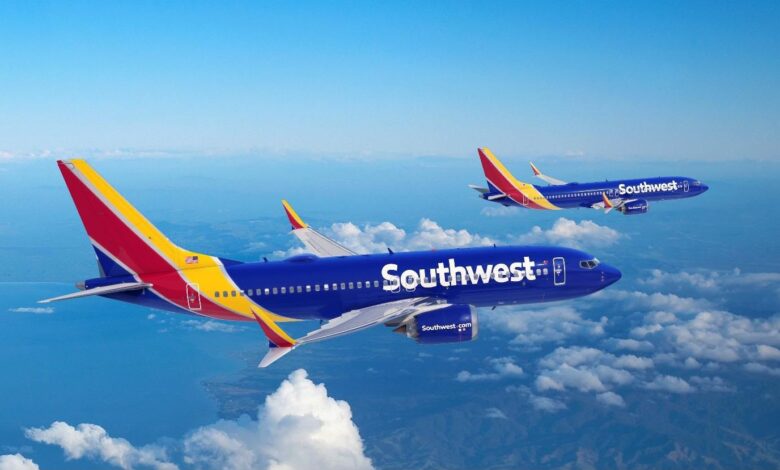
A Southwest Airlines Boeing 737 MAX 8, registered N8825Q, operated 44 flights before tail damage sustained during a storm was discovered. According to the final report released by the US National Transportation Safety Board (NTSB) on November 5, 2026, the aircraft was parked at New Orleans Louis Armstrong International Airport on the night of May 16, 2024, when it was exposed to winds reaching 73 knots. The strong winds caused damage near the attachment point of the standby rudder power control unit to the vertical stabilizer. The aircraft returned to service the following morning without undergoing a special post-storm inspection.
After completing 38 flights, the aircraft underwent scheduled maintenance in Houston on May 23. Hangar surveillance footage showed that during a standby hydraulic system test, the rudder moved to the right but failed to move to the left. Although the personnel responsible for visually verifying the rudder’s movement were not positioned near the tail section, the test was recorded as successfully completed in the maintenance records, and the aircraft was returned to service.
The damage was discovered on May 25, 2024, after the pilots operating flight #WN746 from Phoenix to Oakland experienced movement in the rudder pedals and aircraft oscillations during cruise. The aircraft landed safely in Oakland and was subsequently removed from service for inspection. None of the 175 passengers or six crew members were injured.
The NTSB identified several contributing factors that allowed the damage to go undetected, including the failure to conduct the maintenance test in accordance with established procedures, the absence of a specific wind-speed threshold in Boeing’s maintenance manual that would trigger a special inspection, and deficiencies in Southwest Airlines’ procedures for notifying its maintenance department.