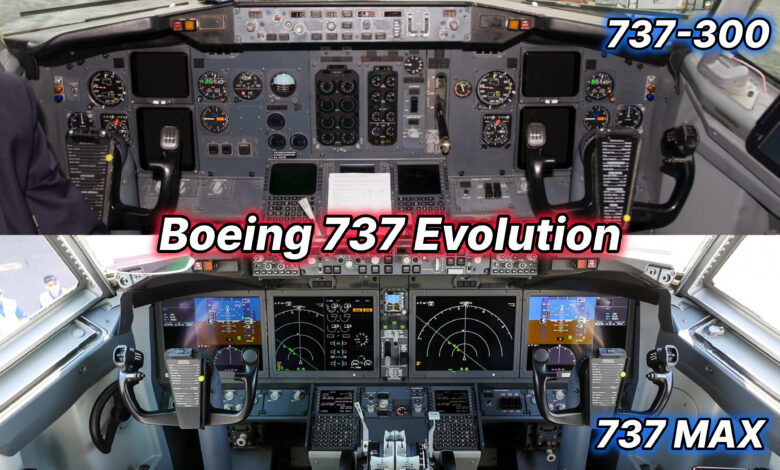
The “Classic” series cockpits, starting with the Boeing 737-300, represent a transition period combining analog instruments with early digital systems. While the first versions featured fully analog round-dial gauges, later developments introduced EFIS systems and a limited glass cockpit layout. Flight data was mostly presented on separate instruments, while navigation and flight management information was distributed across different sections of the panel.
The 737 MAX cockpit, on the other hand, is a strong example of modern digital integration. In the MAX series, large LCD displays are used to enhance pilots’ situational awareness, and advanced flight management systems along with software-based flight characteristics protection systems are integrated into the cockpit architecture.
Throughout the overall evolution process, Boeing chose to modernize the 737 cockpit gradually rather than completely redesigning it. Over time, screen sizes increased, system integration improved, and flight data became more centralized. While the 737-300 represents a hybrid of analog and digital design, the 737 MAX represents the final stage, reaching a fully modern glass cockpit level.