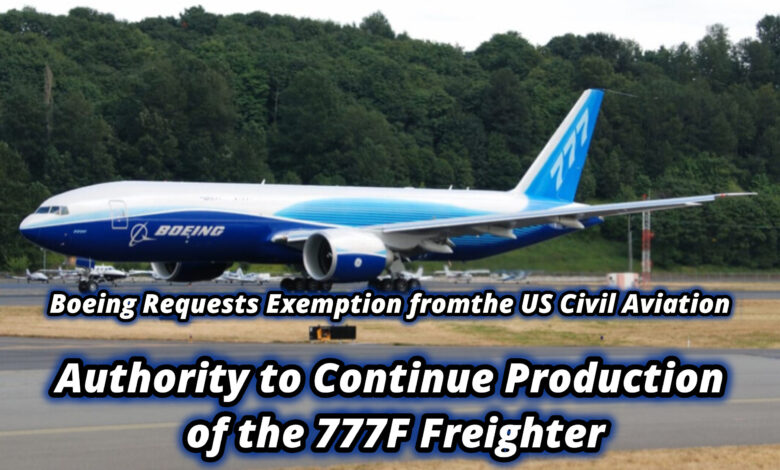
US aircraft manufacturer Boeing has applied for a special exemption from the Federal Aviation Administration (FAA) due to capacity constraints in the air cargo market. The company is seeking a temporary exemption from the International Civil Aviation Organization (ICAO) fuel efficiency regulations that came into force in 2017.
In its application, Boeing cited delays in the 777X certification process and the capacity shortfall emerging in the global air cargo market as key reasons. Within this framework, the aim is to continue production of the 777F (777-200LRF) freighter beyond December 31, 2027.
If approval is granted by May 1, 2026, Boeing plans to produce up to 35 additional 777F aircraft until the 777-8F enters service. The requested exemption is also expected to cover operations outside the United States.
While the entry into service of the next-generation 777-8F freighter is expected to slip into the 2029–2030 timeframe, the passenger variant, the 777-9, is currently planned to enter service in 2027.
Under current ICAO regulations, production of the 777F and 767F is scheduled to end as of 2027. Meanwhile, following a fatal United Parcel Service (UPS) MD-11F accident in November, approximately 60 MD-11F aircraft were temporarily withdrawn from service.
According to Boeing’s internal assessments, the likelihood of the MD-11F fleet returning to operations is estimated at around 50%. It is also noted that FedEx (Federal Express) and UPS had already planned to gradually phase out this aircraft type from their fleets.
Industry assessments indicate that, with existing freighter fleets approaching the end of their safe operational lifespans and next-generation platforms facing delays, the exemption requested by Boeing is of critical importance for global air cargo capacity.