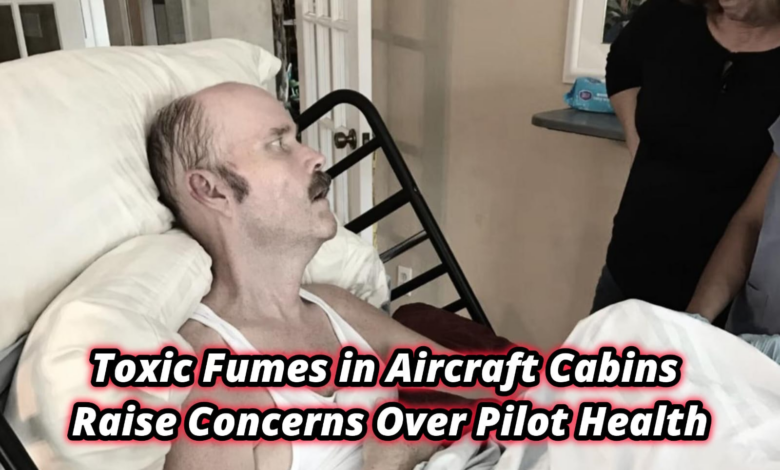
The illness of American Airlines pilot Ron Weiland, which resulted in a diagnosis of ALS, has brought renewed attention to toxic smoke incidents in aircraft cabins known as “fume events.” At 54 years old and previously healthy, Weiland began struggling with simple everyday movements in 2016.
In October 2016, during a table tennis match, Weiland started missing routine shots he would normally execute with ease. Speech difficulties soon followed. After operating his final flight in May 2017, during which he struggled to make passenger announcements, he was diagnosed with ALS.
Two months before his symptoms appeared, Weiland had canceled a flight while operating a Boeing 767 in Miami due to a strong engine oil smell and smoke filling the cabin. In such “fume events,” toxic gases produced by synthetic oils leaking into the engines can enter the cabin and cockpit. Doctors have emphasized that exposure to these fumes may be linked to serious health problems among pilots and cabin crew.
Weiland’s wife, Martha Weiland, claimed that her husband’s exposure to toxic cabin air triggered his illness and filed a lawsuit against Boeing in 2020. Boeing denied the allegations, and the case was settled confidentially in 2022. The company maintained that aircraft air systems have long been approved by the FAA and that cabin air is safe.
Meanwhile, reports of fume events have increased significantly in recent years. Analyses based on FAA data indicate that such incidents at major US airlines have risen nearly tenfold over the past decade.
Many doctors and researchers note that while a direct causal link has not yet been definitively proven, there is growing evidence of a relationship between chemicals in cabin air and serious conditions such as ALS, dementia, and brain damage.
Visual: The Wall Street Journal